Technical scenario: refurbishing a energy efficiency and financing models installation
Full methodological path for refurbishing an existing energy efficiency and financing models installation: analysis, design, verification.
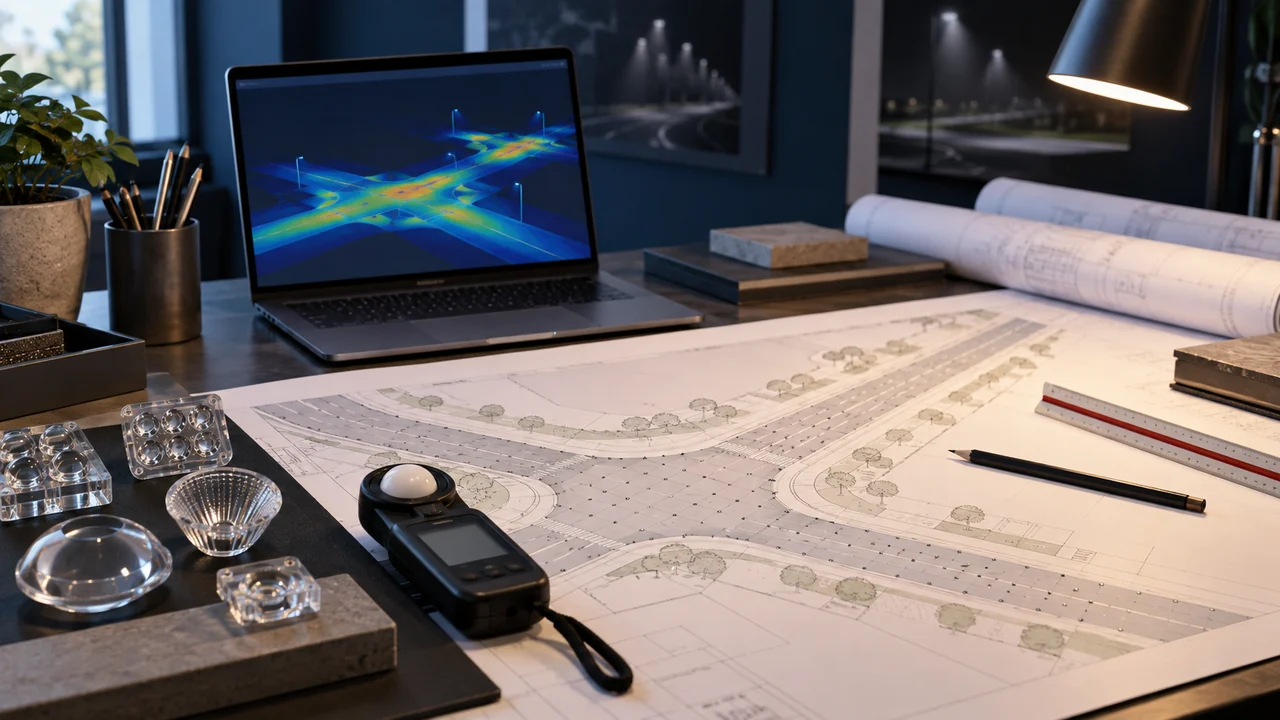
Studio illuminotecnico con planimetria, ottiche e simulazione della luce. Immagine illustrativa generata con AI.
Overview
This technical scenario reconstructs, with no reference to a specific client, the path of a typical energy efficiency and financing models refurbishment. It is a methodological tool: it describes recurring decisions and their impact, not results measured on a real installation. The cost of public and industrial lighting is dominated by energy and maintenance: the contractual model matters as much as the technical one.
Applicable standards
The regulatory reference for energy efficiency and financing models is not a single document but a coordinated set of standards covering performance, safety and environmental impact. In design practice the following documents drive the main choices.
EN 17463 — valuation of energy-related investments.
EN 16247 — energy audits.
Italian CAM for lighting — public procurement requirements.
Typical starting situation
The starting installation typically features heterogeneous luminaires installed at different times, incomplete documentation and reactive maintenance. The first step is not technical but informational: rebuilding the luminaire inventory, the condition of supports and the electrical configuration. Without this basis, any savings estimate remains indicative.
The decisions that shape the project
Three choices determine the outcome: whether to keep or revise the light-point geometry, which performance level to target, and whether to introduce a control system. Each has knock-on effects on cost, schedule and future maintenance complexity, and should be decided explicitly rather than by inertia.
In many cases the existing geometry meets requirements, but not on every section: analysis by homogeneous sections allows structural works to be concentrated where they are genuinely needed, instead of applying a uniform solution across the whole perimeter.
How the result is verified
The result is verified on two levels: lighting compliance, measured with the method prescribed by the applicable standard, and operational performance, assessed on consumption and maintenance interventions after a meaningful operating period. The second level requires that the baseline was documented before the works.
Recurring critical points
The difficulties that most often emerge in energy efficiency and financing models projects are not about product selection, but about defining requirements and verifying results.
Building a credible, verifiable consumption baseline.
Separating savings due to the installation from those due to usage profiles.
Aligning contract duration, warranties and component service life.
Design approach
An orderly method drastically reduces variations during works and disputes at commissioning. Three choices make the difference from the earliest stages.
An energy audit using a recognised method before design.
A measurement and verification plan agreed with the client.
Contract models linking payment to the service delivered.
Parameters to verify
Baseline — EN 16247 — documented reference consumption
Investment appraisal — EN 17463 — standardised economic criteria
Measurement & verification — M&V plan — rules agreed in advance
CAM requirements — Italian CAM — binding in public tenders
Most frequent mistakes
Non-conformities found at commissioning almost always come from three causes: requirements not declared or declared without a reference standard, calculation run on idealised geometry, and an optimistic maintenance factor. All three can be avoided at zero cost during design.
Complete asset survey before any cost estimate
Analysis by homogeneous sections rather than the whole perimeter
Declared, verifiable performance target
Energy baseline documented before the works
Maintenance plan updated after refurbishment
As-built documentation delivered and archived
Key takeaways
A energy efficiency and financing models project holds up over time when requirements are declared, the calculation reproduces real conditions and on-site verification follows an agreed protocol. Component selection matters, but comes later: without measurable requirements even the best product delivers a result that cannot be demonstrated. Centro Studi Lumeitalia makes its technical office available to review requirements and design checks.
Methodological note: This content is written for technical information purposes by Centro Studi Lumeitalia and does not replace the lighting design or a full reading of the standards cited. Applicable performance values are those of the standards in force at design time.
Domande frequenti
How are savings from an efficiency project calculated?+
By comparing consumption with a documented baseline normalised for operating hours and usage conditions, under an M&V plan defined before the works.
What defines a performance contract?+
Payment tied to a measured result — service or savings — rather than to the mere supply of components.
Where should a energy efficiency and financing models project start?+
From a written definition of performance requirements and verification conditions: this step drives every later choice and makes the result either disputable or defensible at commissioning.
Which documents should be requested from the supplier?+
Photometric files of the proposed luminaires, declaration of conformity, lifetime data declared per IES LM-80 with its conditions, the maintenance schedule and warranty terms.
Lumeitalia — Sistemi LED professionali
Lumeitalia è il brand di illuminazione LED professionale di Mya Tech S.r.l., azienda italiana fondata nel 2011 a Trezzano sul Naviglio (MI); il brand è attivo dal 2020.