Technical scenario: a new energy efficiency and financing models installation
From requirement definition to commissioning: methodological path for a new energy efficiency and financing models installation.
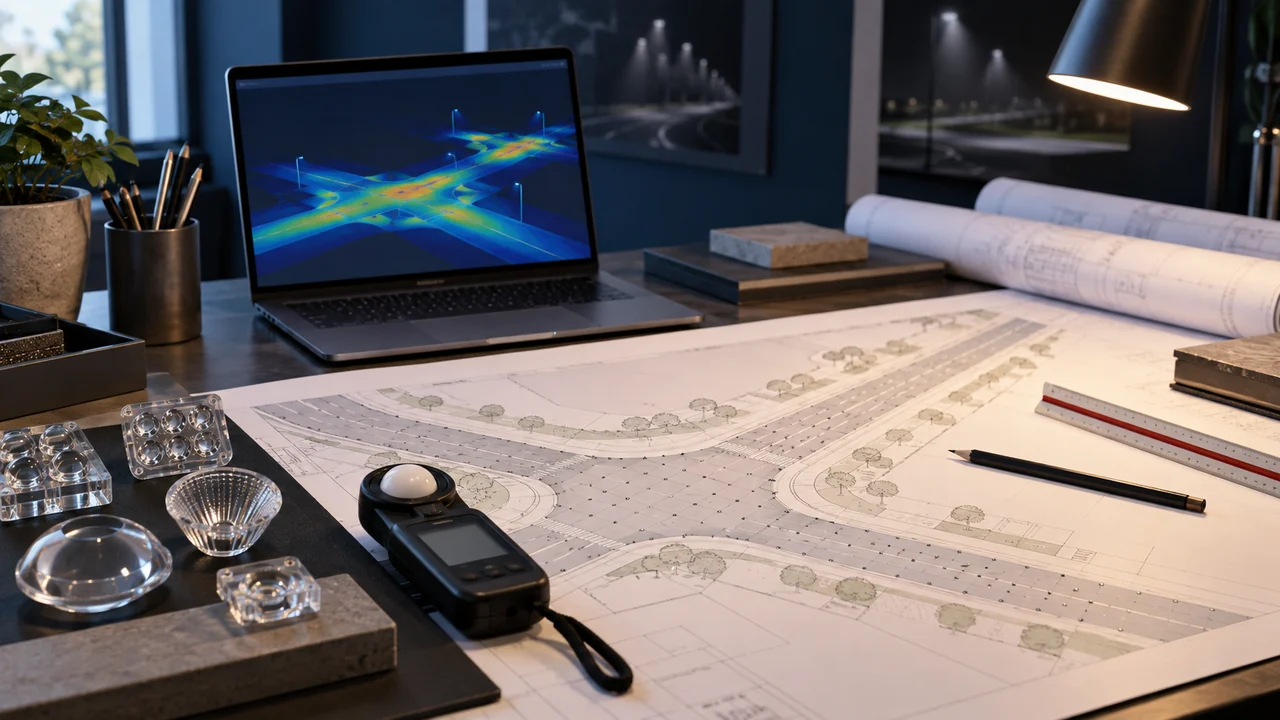
Studio illuminotecnico con planimetria, ottiche e simulazione della luce. Immagine illustrativa generata con AI.
Overview
Designing from scratch removes the constraints of an existing installation but increases responsibility: every geometric, electrical and operational choice is open and must be justified. The cost of public and industrial lighting is dominated by energy and maintenance: the contractual model matters as much as the technical one. The scenario below describes a typical methodological path, with no reference to clients or real installation data.
Applicable standards
The regulatory reference for energy efficiency and financing models is not a single document but a coordinated set of standards covering performance, safety and environmental impact. In design practice the following documents drive the main choices.
EN 17463 — valuation of energy-related investments.
EN 16247 — energy audits.
Italian CAM for lighting — public procurement requirements.
Defining the requirements
The starting point is the real intended use, not the nominal one: an area designed for one purpose and used for another produces unmet requirements from day one. The design must state the assumed usage conditions, so that future changes are recognisable as such.
Geometry and services integration
With free geometry, light-point positions can be optimised for the lighting result rather than existing constraints. They must, however, be coordinated with other disciplines from the outset: underground services, structures, trees and future extensions affect positions and heights more than an isolated calculation model suggests.
The electrical architecture should also be settled early: circuit splitting, isolation points and control provisions determine how flexible operation will be in the coming years.
Commissioning and handover
Commissioning is not the same as switching on: it includes tuning the dimming profiles, verifying performance, training the staff who will operate the installation and handing over complete technical documentation. A well-designed installation delivered without documentation loses much of its value within the first year of operation.
Recurring critical points
The difficulties that most often emerge in energy efficiency and financing models projects are not about product selection, but about defining requirements and verifying results.
Building a credible, verifiable consumption baseline.
Separating savings due to the installation from those due to usage profiles.
Aligning contract duration, warranties and component service life.
Design approach
An orderly method drastically reduces variations during works and disputes at commissioning. Three choices make the difference from the earliest stages.
An energy audit using a recognised method before design.
A measurement and verification plan agreed with the client.
Contract models linking payment to the service delivered.
Parameters to verify
Baseline — EN 16247 — documented reference consumption
Investment appraisal — EN 17463 — standardised economic criteria
Measurement & verification — M&V plan — rules agreed in advance
CAM requirements — Italian CAM — binding in public tenders
Most frequent mistakes
Non-conformities found at commissioning almost always come from three causes: requirements not declared or declared without a reference standard, calculation run on idealised geometry, and an optimistic maintenance factor. All three can be avoided at zero cost during design.
Key takeaways
A energy efficiency and financing models project holds up over time when requirements are declared, the calculation reproduces real conditions and on-site verification follows an agreed protocol. Component selection matters, but comes later: without measurable requirements even the best product delivers a result that cannot be demonstrated. Centro Studi Lumeitalia makes its technical office available to review requirements and design checks.
Methodological note: This content is written for technical information purposes by Centro Studi Lumeitalia and does not replace the lighting design or a full reading of the standards cited. Applicable performance values are those of the standards in force at design time.
Domande frequenti
How are savings from an efficiency project calculated?+
By comparing consumption with a documented baseline normalised for operating hours and usage conditions, under an M&V plan defined before the works.
What defines a performance contract?+
Payment tied to a measured result — service or savings — rather than to the mere supply of components.
Where should a energy efficiency and financing models project start?+
From a written definition of performance requirements and verification conditions: this step drives every later choice and makes the result either disputable or defensible at commissioning.
Which documents should be requested from the supplier?+
Photometric files of the proposed luminaires, declaration of conformity, lifetime data declared per IES LM-80 with its conditions, the maintenance schedule and warranty terms.
Lumeitalia — Sistemi LED professionali
Lumeitalia è il brand di illuminazione LED professionale di Mya Tech S.r.l., azienda italiana fondata nel 2011 a Trezzano sul Naviglio (MI); il brand è attivo dal 2020.